Washington, DC
Short, reflective audio experiences designed to be listened to while walking through real places.
Thoughtful audio walks through cities, museums, and ideas
Institutions in Action
EN10 min-
Collection

Democracy depends on institutions—imperfect, slow, and often frustrating, yet built to outlast individual tempers. This collection explores the architecture of governance: how debate becomes law, how law becomes precedent, and how memory becomes legitimacy. You’ll walk among buildings that broadcast stability while containing conflict, compromise, and constant interpretation. These tours invite you to notice how power is distributed, how procedures shape outcomes, and how the city teaches you to read politics as a kind of design.

Open interactive collectionBack to city overview
Places
The U.S. Capitol — Legislation and conflict
10 min
SEO page
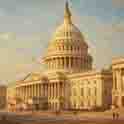
You stand before the U.S. Capitol, its dome lifting above the city like a promise that keeps being renegotiated. The steps and columns look calm, almost ceremonial, yet they’ve witnessed urgency: arguments that lasted for days, compromises stitched together at midnight, and moments when the nation’s divisions became impossible to ignore. Listen for the contrast between the building’s symmetry and the messy human work it contains. Here, legislation is not just policy—it is conflict shaped into procedure, ideals translated into clauses, and power constrained by rules that can still be bent. As you take it in, notice how the architecture asks you to believe in continuity, even when history is anything but smooth.
The Supreme Court — Interpretation and power
10 min
SEO page
You stand before the Supreme Court, where quiet architecture contains loud consequences. The marble steps rise with a kind of practiced confidence, and the façade presents justice as timeless—an ideal carved into stone. Inside, interpretation becomes power. Words written centuries ago are made to speak to modern lives, and the distance between principle and outcome can feel both razor-thin and immense. As you look up at the columns, notice the stillness: it isn’t emptiness, but concentration. This place asks you to consider how a society decides what counts as fair, what counts as lawful, and what happens when those two drift apart.
Library of Congress — Institutional memory
10 min
SEO page
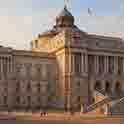
You stand before the Library of Congress, a monument to the idea that a nation is also a mind. Beneath its ornament and grandeur lives something quieter: the patient accumulation of pages, maps, recordings, and handwritten traces of lives that wanted to be understood. This is institutional memory made physical. It preserves brilliance and bias, discovery and distraction, the official record and the overlooked footnote. As you take in the building, imagine the sheer scale of thought stored here—not as a museum of certainty, but as a living archive of questions. In this place, knowledge feels both powerful and unfinished, the way it always is.